The 10-Minute Home Reset: 5 Easy Steps to Make Tomorrow Easier


A home does not have to be perfectly organized to feel comfortable. Yet a few things left unfinished at the end of the day can make the following morning feel unnecessarily difficult: a kitchen counter covered with yesterday’s items, clothes waiting to be put away, keys that are nowhere to be found, or a dining table that has quietly become a storage space.
The solution is not necessarily a longer cleaning routine. Sometimes, what makes the biggest difference is a short, repeatable habit.
The 10-minute home reset is a simple evening routine designed to prepare your living space for the next day. It is not a complete cleaning session, and it is not about making every room look perfect. Instead, it focuses on restoring order to the places that influence your daily routine most.
Here is how to make those ten minutes count.
A 10-minute home reset works best when it focuses on the small tasks that make the biggest difference to your next morning.
Why Ten Minutes Can Make a Difference
Small household tasks often become stressful because they accumulate. One cup on the table is not a problem. Several dishes, scattered belongings, an overflowing laundry basket, and misplaced everyday items can become a much bigger distraction.
The purpose of an evening reset is to interrupt that accumulation.
Rather than waiting for a free afternoon to organize everything, you give a few minutes to the areas you will need tomorrow.
Think of it as preparing your environment for your future self.
The 10-Minute Home Reset: A Five-Part Routine
You do not need special cleaning products, storage containers, or a complicated checklist. Start with a timer and follow these five steps.
Minute 1–2: Clear the Surfaces You Use Most
Begin with one or two important surfaces, such as the kitchen counter, dining table, or living-room coffee table.
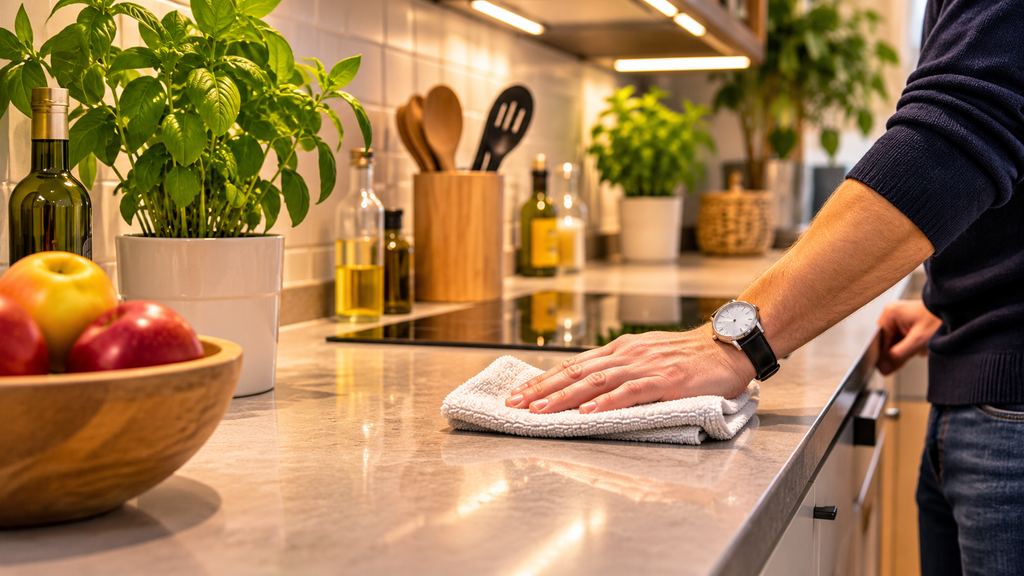
Remove items that do not belong there. Put cups and plates in the kitchen, return books to their place, and collect small objects that have been left behind.
Do not start reorganizing cupboards or drawers. The objective is simply to make the visible areas usable again.
A useful rule: If an item takes only a few seconds to return to its proper place, do it now.
Minute 3–4: Reset the Kitchen
The kitchen often determines how the next morning begins.
Wash a few essential dishes or place them in the dishwasher, wipe the main preparation surface, and check whether anything needs to be stored properly.
You do not need to deep-clean the oven, rearrange the refrigerator, or scrub every surface.
Focus on leaving the kitchen ready for its next use.
If you usually prepare breakfast at home, make sure the items you need are easy to reach.
Minute 5–6: Prepare Tomorrow’s Essentials
This step is less about cleaning and more about reducing morning decisions.
Choose the things you are likely to need the next day:
- Clothes or work items.
- Keys, wallet, and everyday bag.
- Documents or items you need to take with you.
- A water bottle or lunch container, if applicable.
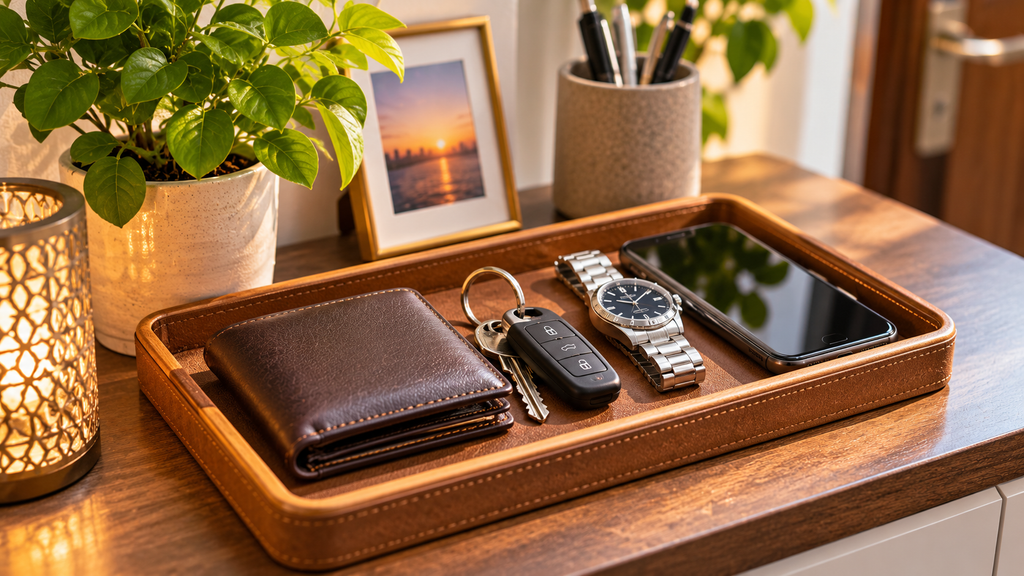
Create one consistent place for frequently misplaced belongings. A small tray near the entrance, for example, can become a reliable home for keys and other daily essentials.
The goal is to avoid searching for important things when you are already in a hurry.
Minute 7–8: Restore the Main Living Area
Take a quick look at the living room or whichever space your household uses most.
Fold a blanket, arrange the cushions, return remote controls to their usual place, and remove objects that do not belong in the room.
If laundry is waiting, place it in the appropriate basket rather than leaving it on a chair.
Do not worry about making the room look like a photograph in a magazine. A comfortable, functional space is enough.
Minute 9–10: Choose Tomorrow’s First Small Action
Finish by looking at the following day.
Is there something that needs attention early? Perhaps an appointment, a grocery item, a household task, or a package that needs to be collected.
Write down one important reminder if necessary.
Then stop.
The final two minutes should help you close the day, not create another list of unfinished responsibilities.
The Room-Priority Test: What Should You Reset First?
Not every home has the same needs. A family with children may benefit from resetting the entrance and dining area, while someone who works from home may find the desk more important.
A 10-minute home reset should reflect the way you actually use your living space, rather than follow a fixed routine designed for someone else.
Use this simple test to choose your priority areas.
Ask yourself three questions:
- Which area causes the most frustration when I see it in the morning?
- Which space do I use first after waking up?
- Which unfinished task is most likely to delay my next day?
Choose the two areas that receive the strongest answers.
These are your priority zones.
You do not need to reset the entire home every evening. Concentrating on the right spaces is often more useful than trying to do everything.
What If You Have Children or Share Your Home?
A home reset does not have to be one person’s responsibility.
If you live with family members or housemates, divide the routine into small, clear responsibilities.
For example:
- One person resets the kitchen.
- Another collects items from the living room.
- Children can put away their toys or school belongings, according to their age.
- Everyone returns their personal items to the agreed place.
Keep the responsibilities realistic. The objective is to create a shared habit, not to turn the evening into a series of instructions.
A visible checklist can help, particularly when several people use the same spaces.
The Seven-Day Home Reset Experiment
Testing a 10-minute home reset for seven days can help you discover which parts of the routine genuinely suit your household.
Instead of trying to change every household habit immediately, test this routine for seven consecutive evenings.
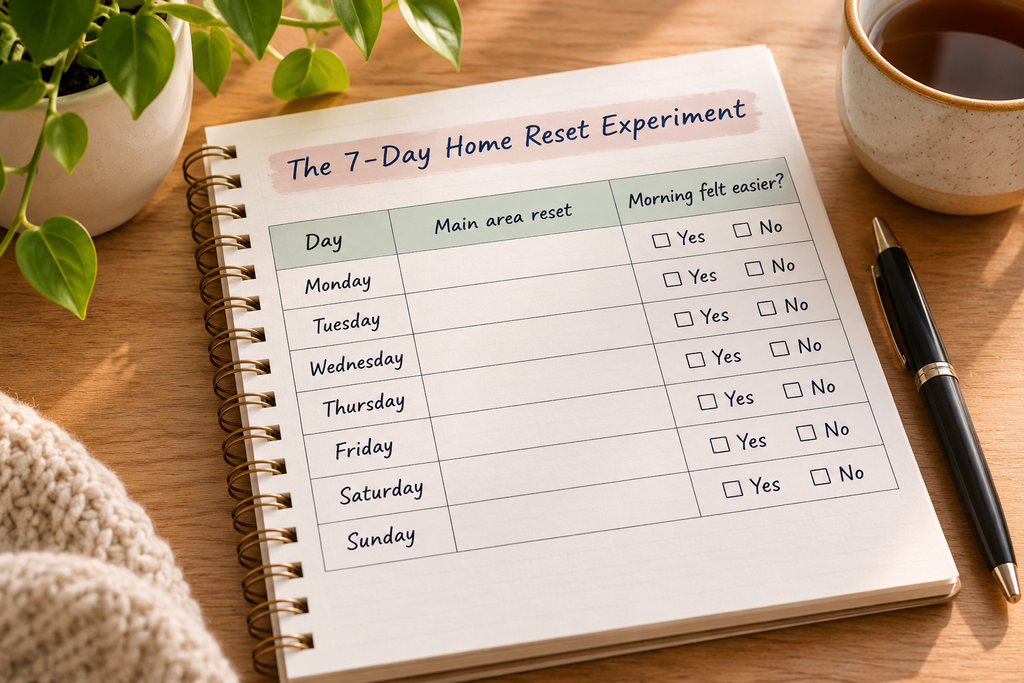
Use the following simple record:
| Day | Main area reset | Morning felt easier? |
|---|---|---|
| Monday | __________ | Yes / No |
| Tuesday | __________ | Yes / No |
| Wednesday | __________ | Yes / No |
| Thursday | __________ | Yes / No |
| Friday | __________ | Yes / No |
| Saturday | __________ | Yes / No |
| Sunday | __________ | Yes / No |
At the end of the week, look for a pattern.
Did you spend less time looking for things? Was breakfast easier to prepare? Did you feel more comfortable entering the living room in the morning?
You may discover that two or three small actions make a bigger difference than a longer routine that is difficult to maintain.
If ten minutes feels too long on a particularly busy evening, do a shorter version. Consistency matters more than completing every step.
When You Should Skip the Reset
There will be evenings when you are tired, busy, or simply not in the mood to organize anything.
That is normal.
Do not let a small household routine become another source of pressure. If you have had a demanding day, choose just one useful task, such as clearing the kitchen counter or preparing tomorrow’s essentials.
The routine should support your life, not compete with it.
The real value of a 10-minute home reset is not a perfectly tidy home, but a simple routine you can realistically repeat.
For additional practical ideas, the American Cleaning Institute offers helpful advice on decluttering and home organization, including how to set priorities and organize one area at a time.
A Better Morning Begins the Evening Before
An organized home is not necessarily a spotless home. It is a space where everyday activities can happen without unnecessary obstacles.
The 10-minute home reset offers a practical way to reduce small sources of daily friction. By clearing a few surfaces, preparing essential belongings, and choosing tomorrow’s first priority, you give yourself a more manageable starting point.
Try it for seven days. Keep the steps that genuinely help, change the ones that do not, and make the routine your own.
Sometimes, making tomorrow easier starts with just ten minutes today.
Small daily routines can make life easier in many ways. You can use the same thoughtful approach when choosing personal fragrances—our guide, Before You Buy a Perfume: 3-Day Test, explains how to test a scent before making your decision.